


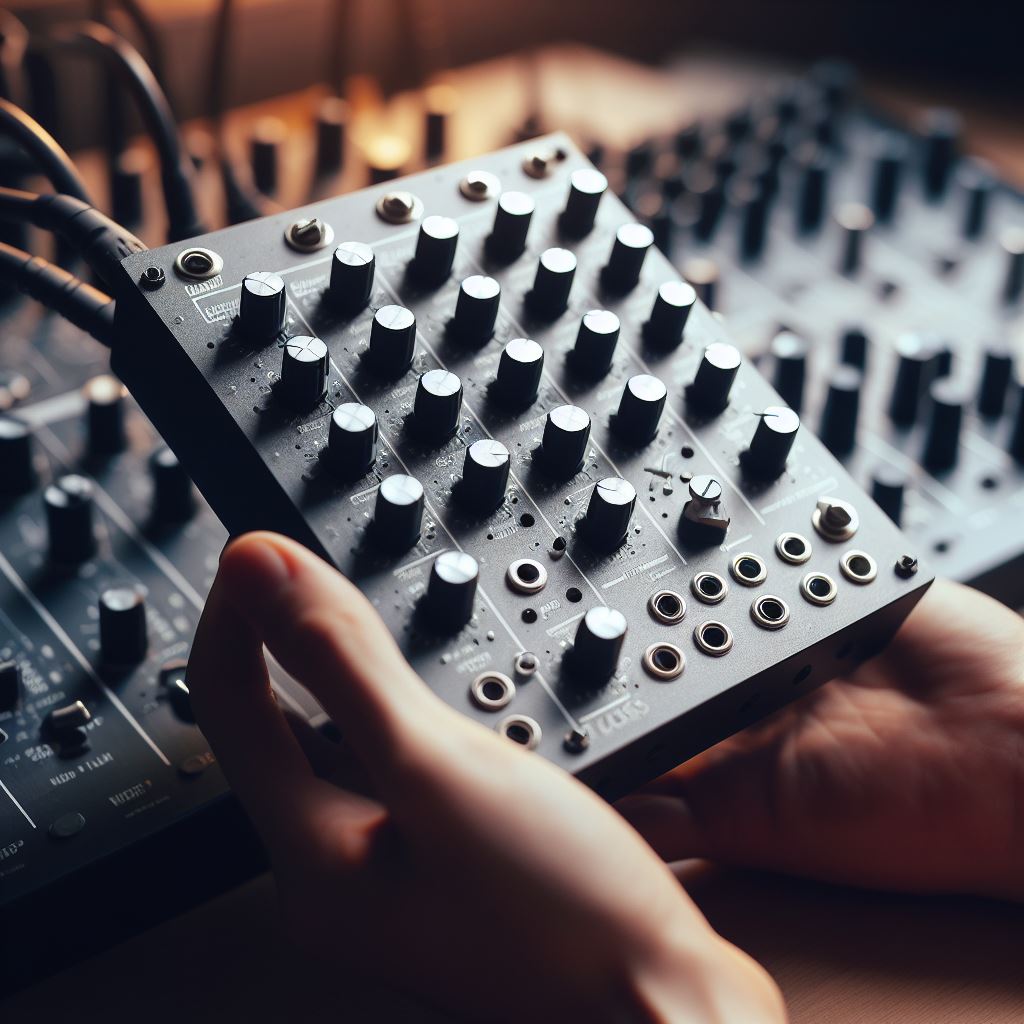
Let Us Dive into the World of LFOs (Low-Frequency Oscillators) in Music Production
What is an LFO?
An LFO, or Low-Frequency Oscillator, is a fundamental component in electronic music production. It is a waveform generator that operates at a frequency much lower than the audible range (typically below 20 Hz). LFOs produce continuous cyclic waveforms that are used to modulate various parameters in synthesizers, effects, and other audio equipment.
How LFOs are Used:
- Modulation: LFOs are primarily used to modulate (change over time) other audio signals. They can be used to control parameters such as pitch, amplitude, filter cutoff, and pan, introducing movement and variation into the sound.
- Creating Vibrato and Tremolo: LFOs are commonly employed to create vibrato (pitch modulation) and tremolo (amplitude modulation) effects in musical instruments, adding expressive qualities to notes.
- Filter Sweeps: LFOs can control filter cutoff frequencies, producing evolving and sweeping filter effects. This is often used in synthesizers to shape the timbre of sounds.
- Panning: By modulating the stereo panning position with an LFO, you can create the sensation of sound moving from left to right, which is useful for spatialization effects.
- Chorus and Flanger Effects: LFOs are crucial in chorus and flanger effects, where they modulate the delay times or filter positions to create the characteristic swirling and sweeping sounds.
Where LFOs Can Be Used:
LFOs are widely used in:
– Synthesizers: They shape the character of synthesized sounds.
– Effects Processors: For modulation and time-based effects.
– Sound Design: To create evolving textures and atmospheres.
– Electronic Music Production: For rhythmic and expressive elements.
When LFOs Shouldn’t Be Used:
LFOs may not be suitable for all types of music. They are less common in genres that rely heavily on acoustic instruments and natural sounds, like classical or folk music, where the emphasis is on preserving the purity of the original sound.
Advantages of Using LFOs:
– Expressiveness: LFOs add dynamics and expressiveness to electronic music.
– Sound Sculpting: They enable intricate sound design and timbral manipulation.
– Automation: LFO-driven parameters can be automated for precise control.
– Creativity: LFOs open up creative possibilities, allowing for unique textures and effects.
Disadvantages of Using LFOs:
– Overuse: Overusing LFO modulation can lead to overly busy or chaotic sounds.
– Complexity: Using LFOs effectively can be complex and require a good understanding of synthesis.
– Artificiality: LFOs can make sounds sound less natural, which may not be desired in all contexts.
Main Points of LFOs:
– Frequency: LFOs operate at low frequencies, typically below 20 Hz.
– Waveforms: They generate various waveforms like sine, triangle, square, and sawtooth.
– Modulation: LFOs are used to modulate parameters in synthesizers and effects.
– Expressiveness: They add movement, texture, and character to electronic music.
In summary, LFOs are powerful tools in music production, capable of shaping and enhancing sound in countless ways. When used judiciously, they can be a key element in creating compelling and dynamic electronic music.

 in Music Production)